
28 Apr 2025
Expensive Monitor Arm Compare to a Cheap One
Why is there a huge price difference among seemingly identical monitor arms? An article analyzes the key points for purchase!
As a professional with five years of experience in selling monitor arms, I'm frequently asked by customers, "Why does the monitor arm from other brands, which looks the same, cost only half of yours?"
When I was a novice salesperson, I would suggest customers buy both the cheap and expensive monitor arms to compare and experience at home. However, this proposal was often rejected. After all, no one is willing to waste time and money on such an attempt.
Now, I've decided to elaborate on the core differences between high - priced and low - priced monitor arms in this article, and share practical tips on choosing high - quality monitor arms.
I. Key factors contributing to the price difference of monitor arms
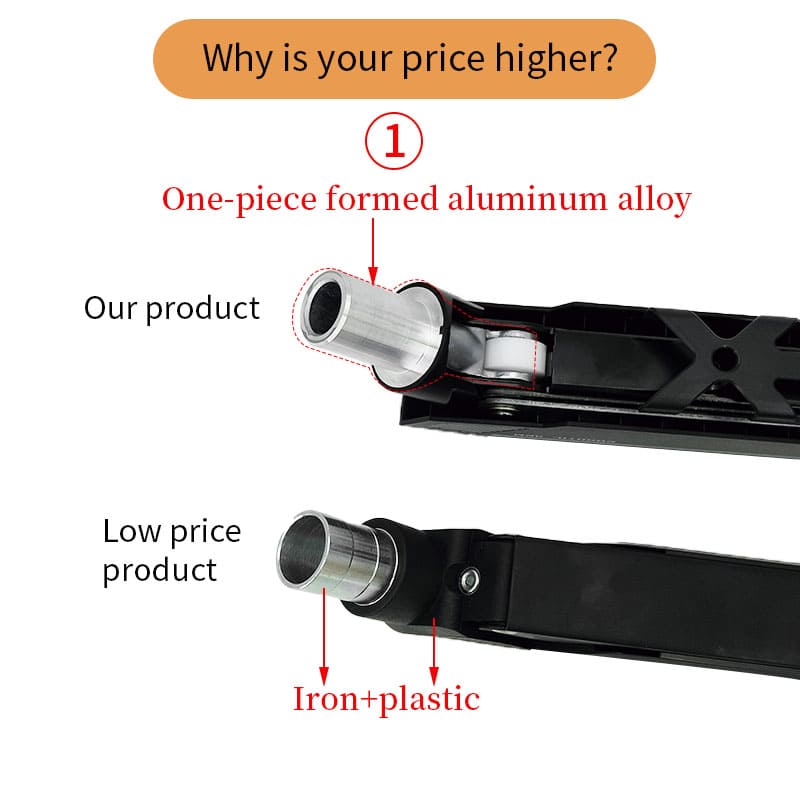
1. Vast differences in the material of the main body joint
As a crucial part of the monitor arm, the material of the joint directly affects its performance and service life.
One-piece aluminum alloy die-cast joint has excellent load - bearing capacity, is not prone to aging and deformation, and has excellent corrosion resistance, providing stable support for the monitor.
On the other hand, iron and plastic (nylon) joint has limited load-bearing capacity. After long-term use, problems such as rusting, aging and deformation may occur, and there may even be potential safety hazards.
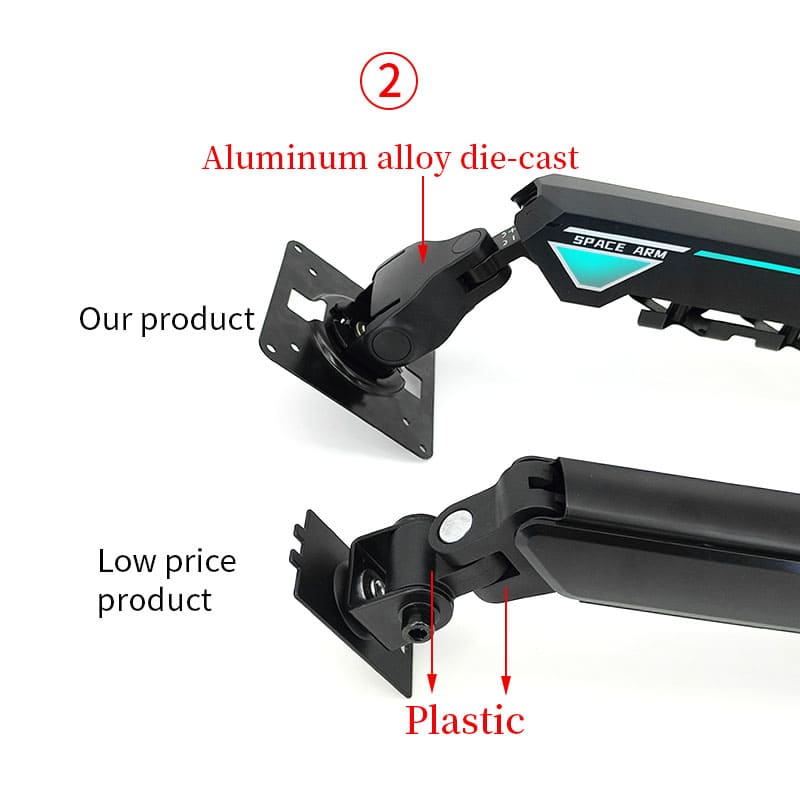
2. The importance of the material at the VESA connector
The connection between the monitor arm and the VESA is also a detail that is easily overlooked.
High-quality monitor arms use aluminum alloy die-cast materials to ensure a tight and stable connection.
In contrast, at the plastic connector, during frequent adjustments, it is prone to loosening, affecting the stability of the monitor and the user experience.
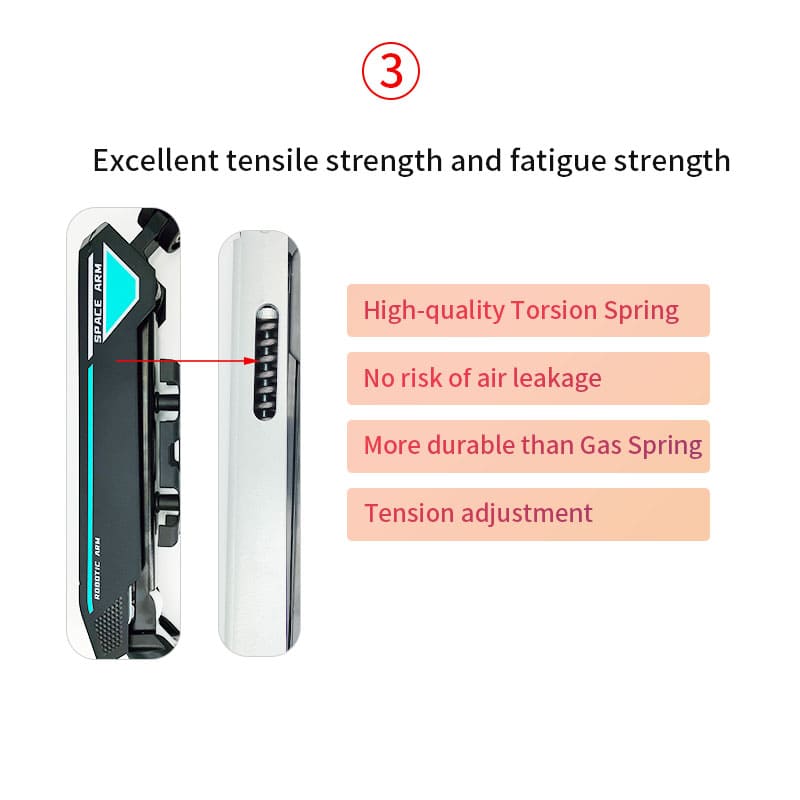
3. Differences in the spring system
Currently, in the market, monitor arms are mainly divided into gas spring and mechanical spring.
- Gas spring - type: It offers good operational smoothness, but there is a risk of air leakage, and its service life is relatively short. Once air leakage occurs, the lifting and adjustment function of the monitor arm will be affected, and it may even become inoperable.
- Mechanical spring - type (high - quality torsion spring): High-quality torsion springs equipped with constant-force technology can also adjust the tension simply and flexibly. In terms of performance, it is in no way inferior to the gas spring, and it has a longer service life and more stable performance, providing users with long-lasting and reliable support.
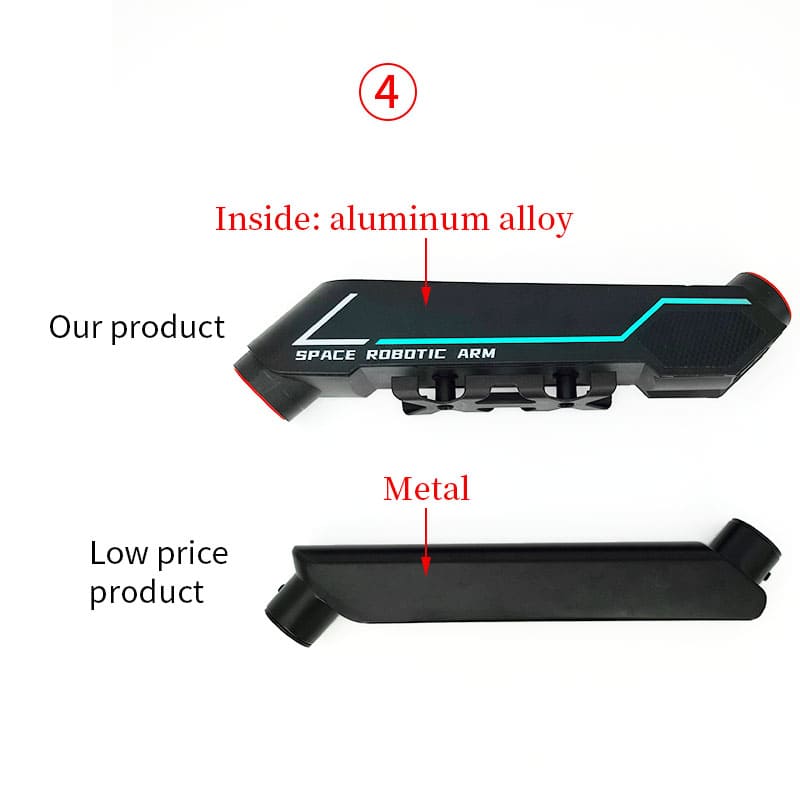
4. The material of the support parts of the monitor arm main body
The internal support parts of high - quality monitor arms are usually made of aluminum alloy die - casting. This material not only has high strength but also can effectively reduce the overall weight of the monitor arm.
Ordinary iron support parts are difficult to meet the long - term use requirements in terms of load - bearing and durability.
II. How to choose a high - quality monitor arm?
1. Define your usage needs
Before purchasing, think about your usage scenarios and needs first.
If you need to adjust the height and angle of the monitor to a large extent, you can choose an monitor robotic arm.
If the monitor does not need to be adjusted significantly, you can choose a desktop monitor stand.
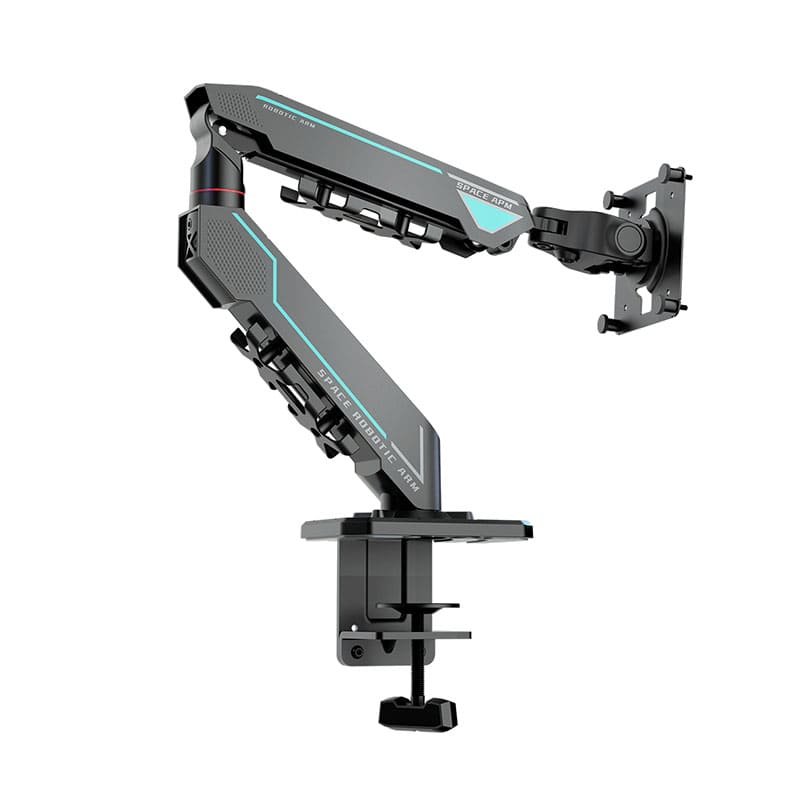
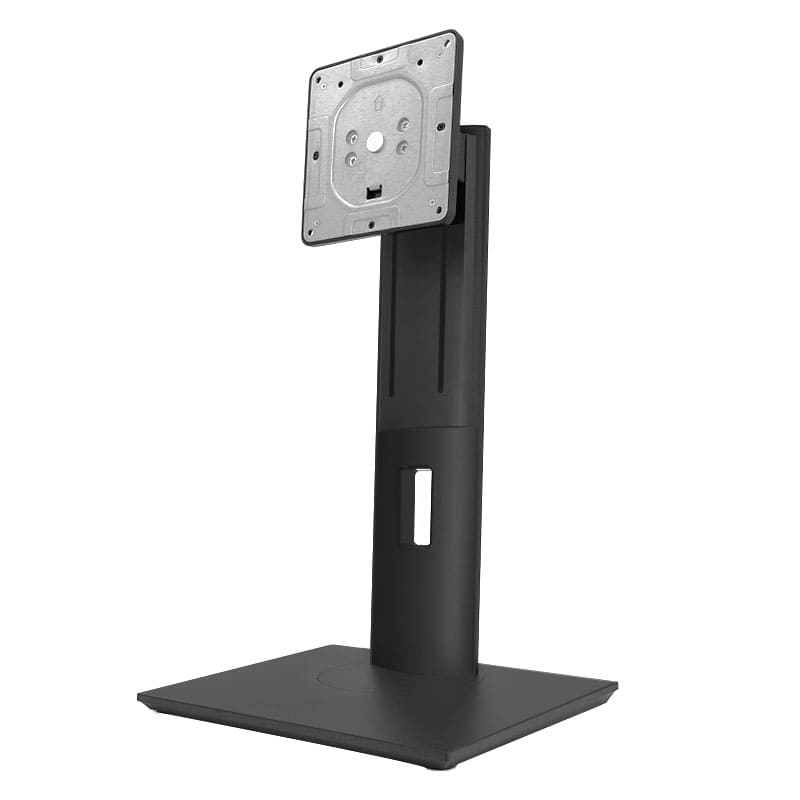
Monitor robotic arm Desk monitor stand
2. Pay attention to the core materials
Focus on checking the materials of the connector, the VESA connector, and the support parts of the main body. Give priority to products made of aluminum alloy. At the same time, understand the type of spring system. If you pursue long-term and stable use, it is recommended to choose a monitor arm equipped with a high-quality torsion spring.
3. Check product parameters.
Carefully check parameters such as the load - bearing range, adjustment angle, and lifting height of the monitor arm to ensure that it can meet the requirements of your monitor.
From the above analysis, it can be seen that behind the price difference of monitor arms, there are huge gaps in materials, craftsmanship, and performance.
When purchasing, don't be misled by low prices. By comprehensively considering your own needs and product quality, you can select a monitor arm that is both practical and durable, bringing you a more comfortable experience in work and entertainment!